What is Internal Wing Chun?
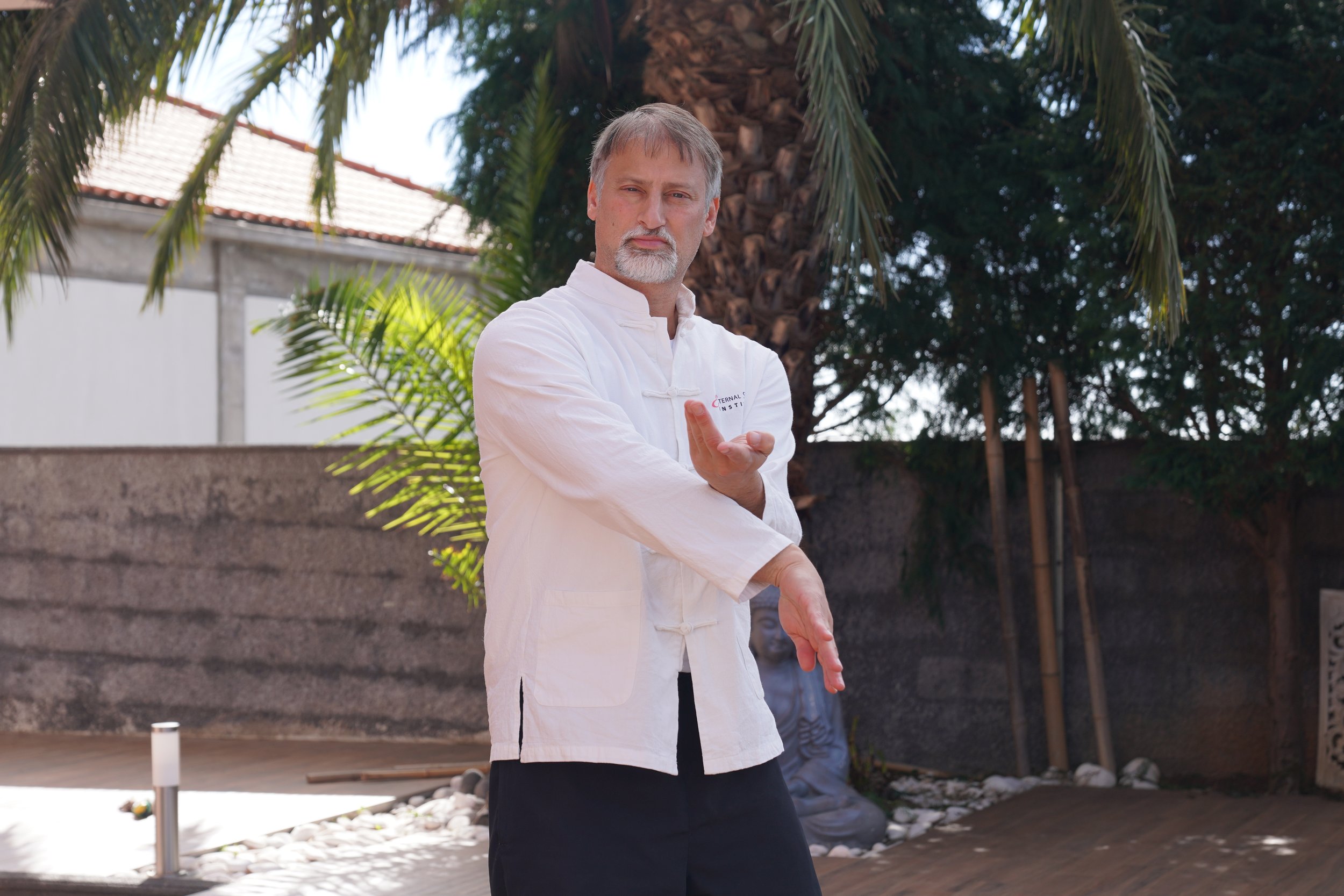
Many people today know Wing Chun only through its outer appearance. They see the shapes, the hand techniques, the centerline, the forms, and the drills. But that is only the surface. Internal Wing Chun goes much deeper.
Internal Wing Chun is not just a collection of movements or techniques. It is a method of cultivation. It trains not only the body, but also awareness, touch, timing, balance, intention, and the ability to remain connected and integrated under pressure. Instead of depending mainly on muscular strength, speed, or tension, it develops a more refined kind of skill.
This is where many people misunderstand the word internal. They think it means something mystical, vague, or soft in a weak sense. But true internal training is neither vague nor weak. It is precise. It is practical. It is demanding. It asks you to give up the crude habit of fighting force with force and to develop a higher level of control.
Most people, when they feel pressure, respond with strength. They push, brace, lean, and resist. This is natural in the beginning, but it is limited. If your skill depends on strength, then someone bigger, stronger, or more aggressive can always become a problem. Internal Wing Chun seeks a different path. It teaches you how to remain balanced, how to yield without collapsing, how to control through contact, and how to use the whole body as one connected unit.
One of the keys in Internal Wing Chun is to never make the point of contact the point of application of force. This is a very important principle. Many people touch and immediately push from the place of contact. That is their weakness. The moment the point of contact becomes the point where force is applied, their intention becomes obvious, their structure becomes readable, and their control becomes limited. In Internal Wing Chun, contact should give information, sensitivity, and access, but not become a crude point of pressure.
At a deeper level, Internal Wing Chun is about unity. The hands do not act separately from the body. The body does not act separately from the mind. Structure, intent, awareness, and sensitivity must all work together. Without this integration, what people call skill is often only effort.
Another essential part of Internal Wing Chun is listening. When there is contact, you must be able to feel more than pressure alone. You must feel intention, imbalance, tension, emptiness, direction, and opportunity. This kind of sensitivity cannot be developed through force. It comes through correct training, correct method, and long practice.
This is also why real Internal Wing Chun is rare. Many people can imitate movements. Far fewer can transmit the deeper qualities that make the art alive. The outer form can be copied, but the internal skill must be developed.
For me, Internal Wing Chun is the path of refining the art beyond mechanical technique. It is the study of how to use less force and more awareness, less tension and more connection, less struggle and more control. It is not only about fighting better. It is also about developing the body and mind in a way that can continue for a lifetime.
If you only know Wing Chun from its outer shapes, then you know only one layer. Internal Wing Chun begins when you start to understand what is happening underneath the movement.
Want to go deeper? Check our online Eternal Spring Institute Internal Wing Chun academy.